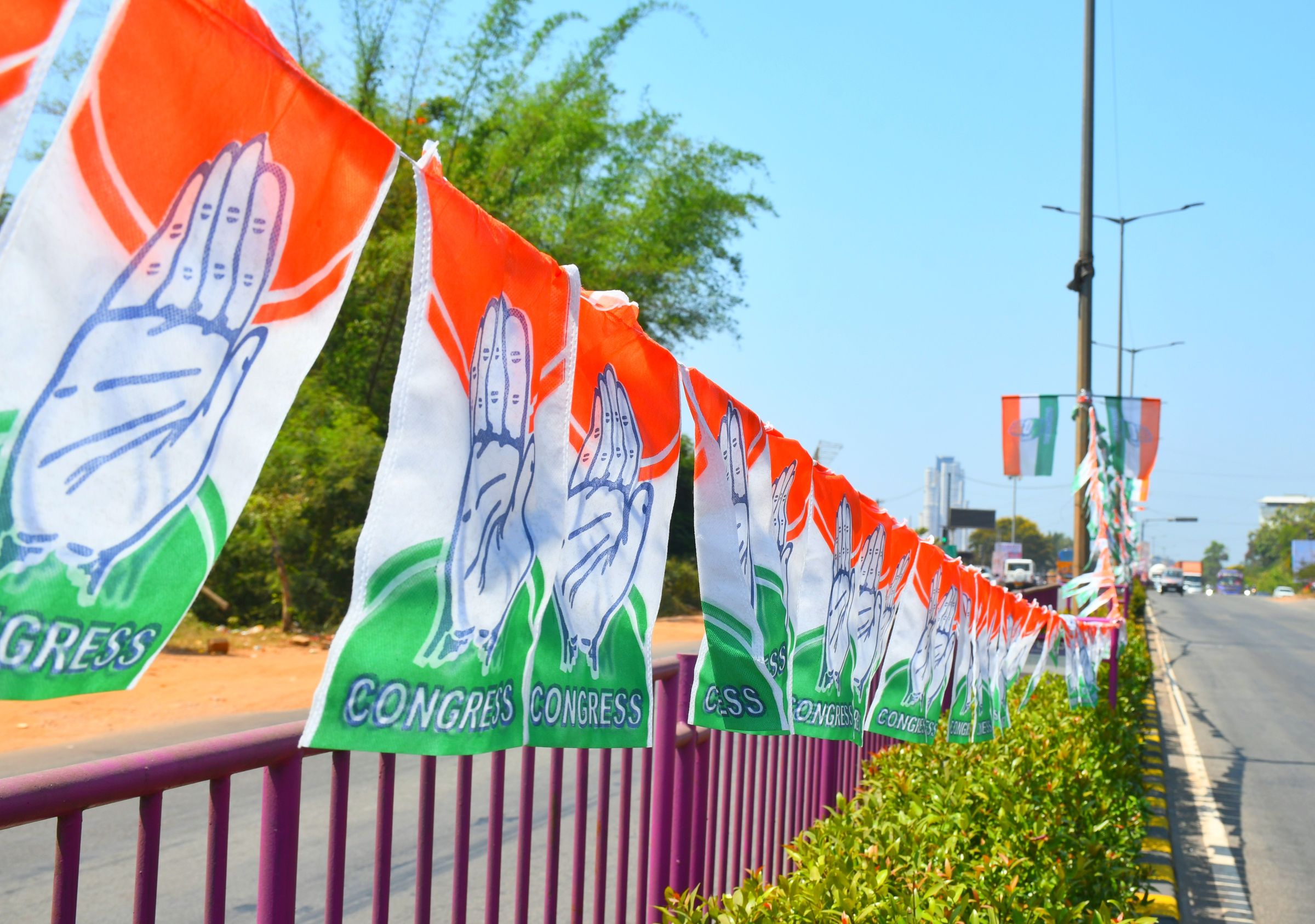
The question of who would actually run India’s government was settled, according to Sonia Gandhi’s own account, in a long night of argument at home after the 2004 election victory. She had led the Congress party’s campaign, and when she went with Manmohan Singh to the presidential palace in Delhi to formally stake the Congress-led alliance’s claim to form a government, everyone assumed she would take the top job herself. She said nothing. At home, she told a senior aide she intended to refuse.
Party workers gathered at the gates; senior colleagues demanded a meeting. “You fought the election, you led us,” one said. “People believed in you. How can you let them down like this? Our workers will revolt. You think they’ll accept another leader?” Alliance leaders surrounded her, and one insisted: “We will not take no for an answer.” Overwhelmed, she murmured “Theek hai”, all right. They took it as consent and began congratulating her.
Her children were appalled. Rahul stormed in: “You said yes?” Priyanka urged her not to be forced into a decision. She writes that she spent that night arguing with herself, friends and family, weighing a risk that was not merely personal: she believed the opposition Bharatiya Janata Party would continue to exploit her foreign birth, and that accepting office would let the controversy “create havoc” and hurt the country. By morning she was clear. “I’ve made up my mind. I’m going to stick to my stand,” she told Rahul. She chose Singh, a trained economist and party member, describing him as a man “above reproach” with a “deep and consummate understanding of governance”.
That episode is among the most dramatic scenes in Belonging: A Journey of Love, her new memoir, a 502-page account of a life spent at the centre of Indian public administration without, by her own telling, ever wanting the job. The book traces how a woman who largely stayed away from politics came to head the Congress party, lead it through two general election victories, and become one of the country’s most consequential political figures.
The memoir opens with the moment that thrust her there. On the morning of 31 October 1984, she was a young wife and mother in the prime minister’s residence in Delhi when she heard shots in the garden. Her mother-in-law, Prime Minister Indira Gandhi, had just left for her office and was assassinated by two of her Sikh bodyguards, in retaliation for the army’s storming of the Golden Temple in Amritsar earlier that year. The sound was like firecrackers, but “different”. The children’s nanny pounded on the bathroom door, hysterical. Sonia ran towards the path; inside a white Ambassador car moving slowly towards her, Indira lay covered in blood, her eyes open, her face wearing what Sonia remembered as a look of surprise. At the hospital she waited hours before a doctor’s shake of the head confirmed her fear.
The ordeal continued. Rajiv Gandhi, her husband, summoned from a rally in West Bengal, arrived to say party leaders wanted him as prime minister. “They will kill you; they will kill you, too!” she pleaded. He replied: “They will kill me anyway.” That evening, as Indira’s body lay at home, Rajiv was sworn in. In 1991, he too was assassinated.
She had met Rajiv, an Indian student, in England when she was 19, a young woman from a small Italian town. After his killing, even the public appearances required by the memorial trusts she headed became an ordeal; before speeches she feared tears would overwhelm her. Asked by the Dalai Lama whether she felt vengeful towards her husband’s killers, she answered, “No, I don’t,” and burst into sobs. Slowly, she writes, Rajiv became “a presence within me rather than a piercing absence”. Grief returned at family milestones, including Rahul’s Cambridge graduation in 1995.
Politics, meanwhile, was closing in. Congress, the political vehicle of her husband’s family for generations, was losing cohesion and electoral ground; senior leaders were defecting, and calls for her to step in grew louder. She initially refused, having seen politics through Rajiv, its achievements but also its “ambition and greed, hypocrisy and treachery”. “I’d always disliked politics,” she writes. But the party’s decline began to feel personal. She feared that rising Hindu nationalism threatened the “secular and pluralistic vision” of India her family had defended, and Congress leaders argued that without her the party could splinter, leaving little to resist communal politics. She believed the family name carried an appeal beyond religion, caste, language and region, which she calls “the most compelling argument”. Her doubts about her own credentials, and her children’s fear of losing her, were resolved, she says, through private lessons on the Bhagavad Gita with a Sanskrit scholar in January 1997. Its message, to perform one’s duty without attachment to the fruits of one’s actions, settled the conflict. “I had to step out and go where my duty called. And I did.”
The book is most revealing when it turns to the India she believes has been lost. She writes that when she entered public life there was “a certain decency and decorum in parliamentary politics”, and sees now a sharper appetite among those in power “to belittle and torment those who differ from them”. Her portrait of Prime Minister Narendra Modi is unusually direct: they have had “practically no real contact”, and “he tends to look away”, she says. His idea of India, shaped by the Rashtriya Swayamsevak Sangh, affirms “a fundamentalism in which his faith and culture superseded all others”, an India of “hierarchy, order, and control”; hers stands for “inclusiveness, secularism, and social justice”. Yet she concedes she understood Modi’s “discomfort with the ruling elite of our times”, noting that he “had certainly worked his way to power within the RSS from an underprivileged world”.
There are lighter recollections, too. Vladimir Putin comes across as an “engaging personality” who took her on a boat ride in St Petersburg. Nicolas Sarkozy arrived in India in 2008 without his then partner Carla Bruni because they were unmarried, and was cheerfully quizzed at a state banquet by the vice-president’s wife about when he planned to marry her.
By contrast, the memoir is less forthcoming about Congress’s own record. The Bofors gun scandal that damaged Rajiv’s government gets brief treatment, and the book largely sidesteps the patronage, cronyism and corruption that dogged the party in power, offering little reckoning with its share of responsibility for eroded public trust. Sonia, 79, is now a member of the Rajya Sabha; Rahul, 55, is a four-term MP and leader of the opposition; Priyanka, 53, is also in parliament. The final pages carry unmistakable melancholy. “At this moment it seems to me that, although I tried my best, I didn’t succeed in beating back the forces I’d set out to fight.”
Whether that verdict holds, or whether the party her family built can still be run as she once hoped, is a question the memoir leaves open.