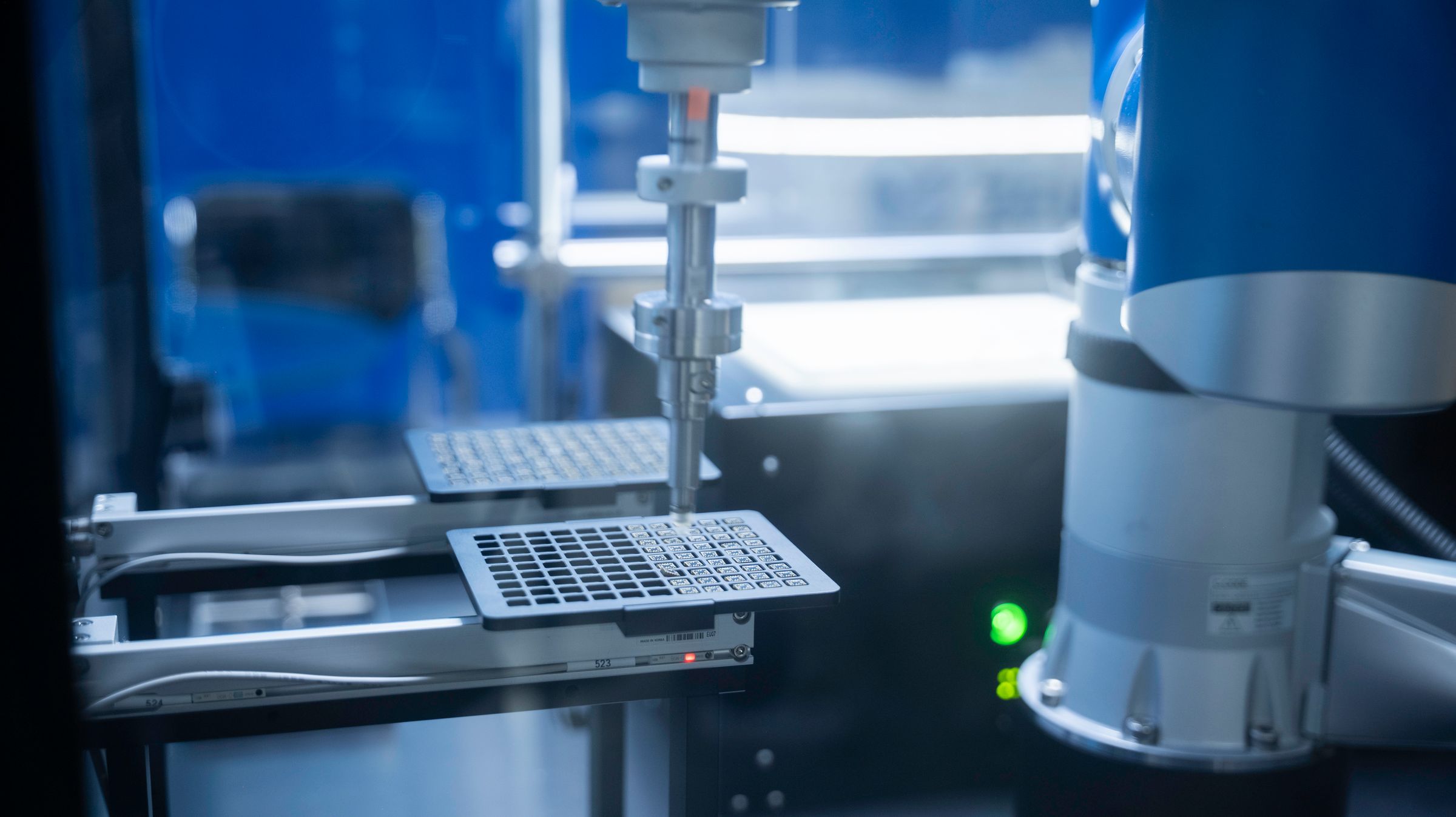
A £165 million National AI Biosecurity Initiative anchors the AI package Chancellor of the Exchequer John Healey MP will fold into the Budget on 24 October 2026, part of more than £600 million in new AI investment spread across institutions, research centres and cyber defences from Edinburgh to Manchester. The programme, detailed at https://www.gov.uk/government/news/chancellor-unveils-britains-ambitious-plan-for-ai, is designed to build the infrastructure and capabilities needed to manage AI’s risks while speeding up public services and backing British firms.
The security buildout comes with defined funding lines. Within the biosecurity initiative, £100 million goes to a world-first AI Biosecurity Lab to apply AI to the detection and surveillance of biological threats, and £65 million to strengthen biosurveillance and develop medical countermeasures for priority pathogens. The lab will draw on up to £200 million in AI model credits from OpenAI and Anthropic, alongside partnerships with Google DeepMind and London-based AI life sciences firm Basecamp Research.
Cyber resilience gets its own delivery track. A £60 million National Cyber Shield will use agentic AI to improve the UK’s cyber defences, including a £25 million challenge fund for UK AI and cyber security innovators and scoping for a new regulatory sandbox to support deployment of agentic cyber security solutions across critical national infrastructure, the public sector and industry. A new £70 million National Exposure and Real-Time Vulnerability (NERV) Centre will deploy AI tools to identify cyber vulnerabilities across critical infrastructure and the economy. The AI Security Institute receives an additional £120 million to continue testing new AI systems and developing technical standards to mitigate risks.
On the capability side, the money flows into skills and hardware. An £18 million UK Advanced Chip Design Academy will build advanced chip-design skills and connect British research more directly with advanced semiconductor manufacturing, supporting the government’s drive towards reindustrialisation. New investment in AI chip design capability in Edinburgh, alongside a new AI Centre of Excellence in Manchester to develop talent, is intended to make sure the benefits reach every postcode through jobs and new routes to training.
Meanwhile, the Sovereign AI Fund gets an additional £60 million to invest directly in promising UK AI companies so they can scale here, including a new focus area of Physical and Industrial AI building on UK strengths in robotics, autonomous systems and advanced manufacturing. A further £60 million will support Sovereign AI’s R&D Procurement Scheme, delivering solutions to challenges across the health and care system and in AI security, assurance and safe adoption.
Local delivery is also in the plan. £30 million will kickstart local AI partnerships with Mayoral Strategic Authorities, empowering local leaders to bring together councils, businesses, universities, colleges and other partners to pursue locally-led AI adoption, improve services, support local businesses including SMEs, and provide workers with AI skills. A £15 million AI Challenge Prize will reward innovative AI that fixes people’s common problems, with the first award targeted at firms solving health issues. The AI Economics Institute, the world’s first government-backed research institution dedicated to analysing AI’s economic impacts, receives an additional £23 million over the next three years to underpin research on productivity, growth, jobs and living standards, including international collaboration in support of the UK’s G20 Presidency next year. A further £10 million per year will lead the UK’s work in understanding how AI will reshape jobs and industry and how Britain needs to prepare.
Delivery is already visible in public services. In the NHS, AI is helping clinicians analyse over 210,000 chest X-rays each month, around a third of all chest X-rays, producing an 11.5% increase in suspected lung cancer cases identified within 24 hours. That means around 400 more patients receive faster clarity each month, while the average wait for follow-up CT scans has fallen from 6.3 to 5.6 days. HMRC’s AI-powered digital assistant, Ask HMRC, supported around 6.3 million customer interactions in 2025-26, freeing up around 400 full-time equivalent work hours for more complex work.
Chancellor Healey framed the approach as one that does not leave workers behind, saying AI will transform daily life and that every firm, community, hospital and school can benefit. AI Minister Kanishka Narayan said the AI Biosecurity Lab will be a major new global institution, and stressed that Britain cannot afford to rely entirely on technology built overseas. Security Minister Dan Jarvis said the investment will help the UK stay one step ahead of those who seek to use AI to do harm.
Industry voices welcomed the execution focus. Julian David OBE, CEO of techUK, called it a strong £600m+ package focused on AI adoption, trust and security, saying it helps British AI firms grow here, not abroad, a vital step to build sovereign AI capability. Ciaran Martin CB, former CEO of the National Cyber Security Centre, said the package comes at a critical time for cyber defences and that the reinforcement of the NCSC and AISI will help padlock systems and harness AI for defence. Dr Gordon Sanghera of Oxford Nanopore Technologies described AIBL as a bold investment in UK resilience, and Professor Hugh Brady, President of Imperial College London, said biosecurity is one of the defining challenges of the generation and that capabilities must keep pace.
Taken together, the government says the package sets out a distinctively British approach to AI: managing risks responsibly, being ambitious about the opportunity, and backing it with the institutions, capabilities and infrastructure needed to manage the transition. Whether the lab, the shield and the new centres hit their timelines will be the test once the Budget lands in October.