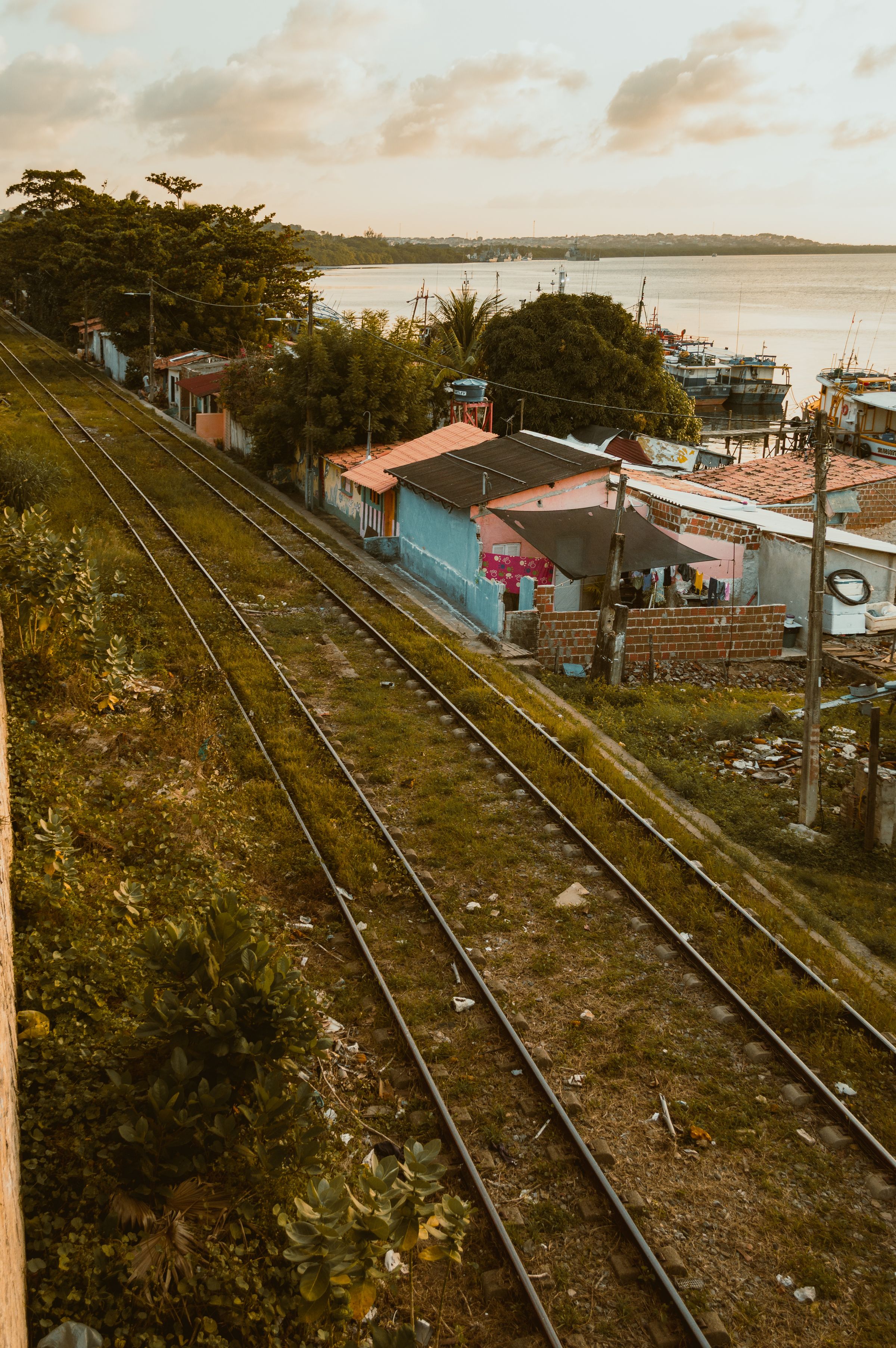
For the mining companies of the Democratic Republic of Congo and Zambia, every tonne of copper or cobalt bound for export begins with the same practical question: which road to the sea? Today, their freight moves along two separate railway corridors that grew up apart from each other, one reaching the Atlantic at the Angolan port of Lobito, the other running to the Indian Ocean through Dar es-Salaam in Tanzania. If those two networks were ever joined, exporters would gain something they have never truly had: a choice. They could weigh costs, transit times and available capacity before committing a shipment to one coast or the other, and they could count on more than one route for bringing in machines, fuel and equipment.
That possibility moved a little closer in late October. On Thursday 29 October, at the close of a meeting in Dar es-Salaam, Angolan President João Lourenço and Tanzanian President Samia Suluhu Hassan reaffirmed their ambition to connect the line serving the port of Lobito with the railway that links Zambia to the Tanzanian coast. Neither leader, however, announced a construction timetable or a new building agreement. The idea itself is not new: it had already been raised in December 2024, at a summit devoted to the Lobito corridor in which Tanzania took part. A fuller account of the project can be found at https://www.latribune.fr/article/afrique/2250712804095814/angola-tanzanie-le-projet-de-relier-latlantique-a-locean-indien-par-rail-se-precise.
Meanwhile, two days before that presidential meeting, a key piece of the puzzle had already advanced. On 27 October, the Africa Finance Corporation, a pan-African infrastructure financing institution, announced that it had selected the companies lined up to build 830 km of new track between Angola and Zambia. Negotiations with the construction firms are due to begin in November, with contracts expected to be concluded within the following 8 to 12 weeks. This new line is meant to allow trains leaving Angola to join the Zambian network that continues on toward Tanzania.
Each of the two existing corridors already carries its own story, and each matters to the people who depend on it. On the Atlantic side, the Lobito corridor already moves goods between the Democratic Republic of Congo and the Angolan port of the same name. It is operated by Lobito Atlantic Railway, a consortium bringing together Trafigura, Mota-Engil and Vecturis. According to the company, nearly 200,000 tonnes of international freight travelled the route in 2025, and mining shipments are growing: a first cargo of cobalt from the DRC was routed along it in April 2026. The corridor’s development has drawn support from the United States, the European Union and several African financial institutions.
On the eastern side, Zambia’s window onto the Indian Ocean is the Tanzania-Zambia railway, known as TAZARA. Built in the 1970s with Chinese backing, it stretches roughly 1,860 km to Dar es-Salaam and was originally meant to ease the export of Zambian copper. Decades of ageing infrastructure and operational difficulties have sharply reduced its traffic. To revive it, Tanzania and Zambia signed an agreement in September 2025 with the Chinese group China Civil Engineering Construction Corporation, foreseeing 1.4 billion dollars, or about 1.252 billion euros, of investment for its modernisation.
Between ambition and reality, however, stand several building sites. The main one is the new line between Luacano in Angola and Chingola in Zambia, which would give Angola and Zambia a direct link, complementing the existing connection between Lobito and the DRC. The selected consortiums still have to negotiate their construction contracts, and financing remains to be finalised. In August, the African Development Bank approved a loan of 255 million dollars and a grant of 10 million dollars to support Zambia’s participation.
Laying new track will not be enough on its own. According to a communication from TAZARA’s management authority published on 13 October, the modernisation programme still has several stages to clear before it fully takes effect. The authority aims to raise annual freight volumes gradually from 110,000 tonnes in 2026-2027 to 1.8 million tonnes in 2030-2031, figures that remain targets rather than achievements. In Zambia, the existing lines will also have to carry trains efficiently between the new arrival from Angola and the network leading to Tanzania.
And once the rails are physically joined, the hardest work may begin. Trains will cross several countries served by different railway companies, with customs formalities and tariffs that must be coordinated. Enough locomotives and wagons will be needed to guarantee regular service, and no agreement governing joint operation of the full route between Lobito and Dar es-Salaam has yet been announced. For the exporters and miners who would actually use it, the value of an Atlantic-to-Indian-Ocean link will ultimately come down to something simple: whether their goods can move from one ocean to the other at competitive prices and on reliable schedules.