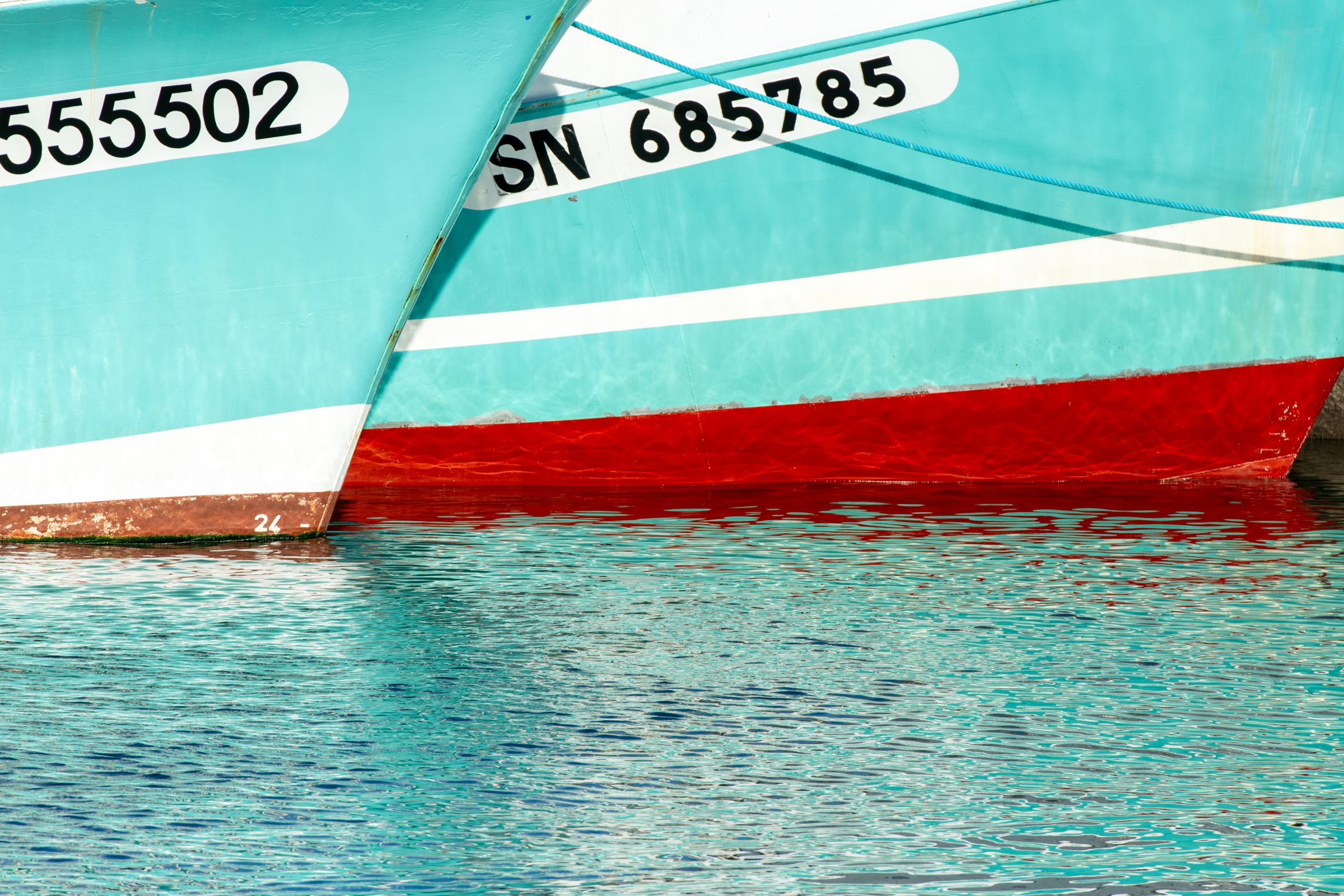
On the quays of Longoni, the worry is not abstract. It is about the money a fisherman brings home to his family at the end of a week at sea, and whether that money will still exist in a few months. “On n’accepte pas ça,” says Abdoukarim Said Nidhoime, president of the syndicat maritime des pêcheurs professionnels mahorais. His words capture the mood among Mayotte’s fishermen since the arrival of a new vessel, the Mahajanga express, which links Madagascar to the island and, they fear, threatens their very livelihood.
The boat carries a refrigerated hold, allowing it to deliver fresh products in 27 hours from Madagascar. For the fishermen, this is unfair competition. “Ce bateau c’est un sujet grave pour nous,” Nidhoime says. “Les associations, les syndicats de pêche et la CAPAM devraient être consultés. Mais on leur délivre des agréments comme ça.” In his view, the professional bodies that represent the men who work the water should have a say in a project that could directly affect the incomes of sailors and their families. It was precisely to agree on a common position that they were due to meet on Thursday afternoon at the CAPAM.
The first crossing already took place on Wednesday 18 November, when a boat from Majunga reached Longoni after a day at sea, carrying around six tonnes of goods destined for Carrefour stores. No fish were on board yet. But the service is tending to become weekly, and the fishermen’s anxiety centres on the place products from the sea could come to occupy in these exchanges. For Nidhoime, developing imports while local professionals already face obstacles to working amounts to further weakening Mayotte’s fishing industry.
That anger does not come out of nowhere. It sits within a deeper crisis. Since November 2025, the fishermen have been immobilised after a derogation allowing their boats to reach the banc de la Zélée was not renewed. Their barques did not meet the safety requirements needed to navigate so far from the coast. For the local fishermen, these restrictions are aimed at favouring Réunionnais fishing. “Les affaires maritimes nous bloquent et nous empêchent d’aller à la Zélée,” Nidhoime says. “Ils veulent en faire une réserve de pêche destinée aux pêcheurs Réunionnais. Ils se sont arrangés entre eux avec les préfets, pour mettre en place cette politique.”
The Parc naturel marin, for its part, points out that fishing is authorised on the banc de la Zélée, but that most boats registered in Mayotte do not have the equipment needed to get there. That distinction matters little to the men whose boats sit idle, and whose families feel the loss of income directly.
There is also the question of money. To comply, fishermen would need new vessels, and Nidhoime estimates the cost at up to 400 000 euros per boat. How could fishermen possibly raise such a sum? He also criticises the lack of support with the administrative steps involved, and fears that the schemes on offer will mainly benefit those who already have the financial and administrative means to take advantage of them. In other words, the men who most need help may be the least able to access it.
For the fishing families of Mayotte, the picture that emerges is one of pressure from every side: a boat arriving from Madagascar that could one day carry fish to the island’s shelves, a closed fishing ground, and a price tag for new boats that sits far beyond what most can pay. The meeting at the CAPAM was meant to give the associations, the unions and the professional bodies a chance to respond together. What is at stake, in Nidhoime’s words, is nothing less than the survival of their trade, and with it the livelihoods of the sailors and the families who depend on them. The full context of the story is available at https://la1ere.franceinfo.fr/mayotte/importation-de-poissons-de-madagascar-les-pecheurs-mahorais-denoncent-une-politique-visant-a-tuer-la-peche-mahoraise-1759848.html.